
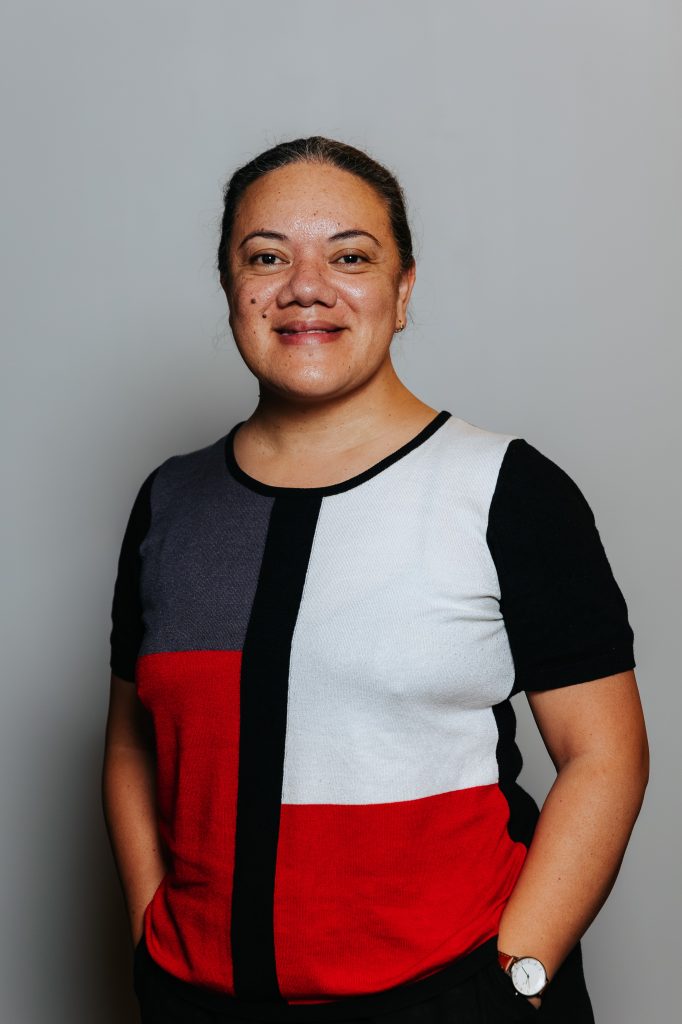
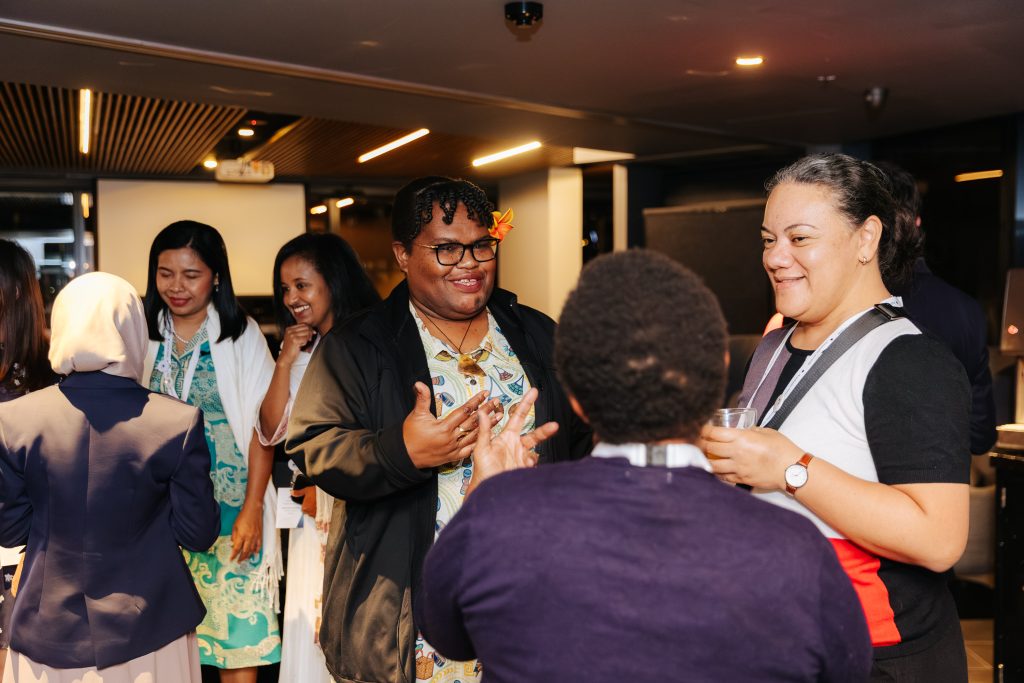
This month, Australia Awards scholars and alumni gathered in Melbourne for Women Deliver 2026 as part of an enrichment experience, contributing to global conversations on gender equality and sharing insights at the Australia Awards booth. Discussions highlighted a clear call for locally led, inclusive and well‑resourced approaches, with strong emphasis on shifting power to communities, engaging men and boys as allies, and advancing action across education, health and grassroots initiatives.
Below, Australia Awards alumna Mele Mangisi shares her reflection from the conference, exploring the intersection of culture, gender and leadership, and the role of Pacific values in shaping inclusive change.
Mālō e lelei.
When we talk about population dynamics, people often think of numbers — birth rates, migration, age structures. But for me, as a Tongan woman and as the first Executive Director of Tonga’s Anti‑Corruption Commission, population dynamics are not statistics. They are stories.
They are the lived realities of our people — our families, our villages, our diaspora, and the cultural values that shape how we relate to one another.
In Tonga, population dynamics and culture are inseparable. Our small population means every person matters. Every voice matters. Every leader matters. And because we are a communal society, our culture plays a powerful role in shaping who gets to speak, who gets to lead, and who is expected to stay silent.
From a young age, I learned that culture is both a foundation and a force. It gives us identity, belonging, and strength. But it also shapes the structures we walk into as adults. And sometimes those structures are deeply gendered. Leadership is gendered. Authority is gendered. Even silence can be gendered.
So, when I stepped into the role of leadership — a space historically shaped by men — I wasn’t just stepping into an office. I was stepping into a cultural structure that didn’t always know what to do with a woman in that seat.
I faced resistance. I faced undermining. I faced attempts to discredit my leadership — not because of my capability, but because my presence disrupted a long‑standing cultural structure.
But here is what I learned:
Culture is not the enemy. Culture is the context. And context can evolve.
Because alongside the challenges, I also experienced something powerful — men as allies. Men who used their influence to support fairness. Men who challenged harmful norms Men who stood beside me, not to protect me, but to protect the principles we all claim to value.
And that is a very Tongan thing. Because one of the most beautiful truths about Pacific culture is that we are a people of unity — with values of shared obligations, mutual respect, humility and loyalty. And these values are not gendered.
This is why population dynamics matter. Our population is small. Our youth are ambitious. Our diaspora is growing. Our systems are still evolving.
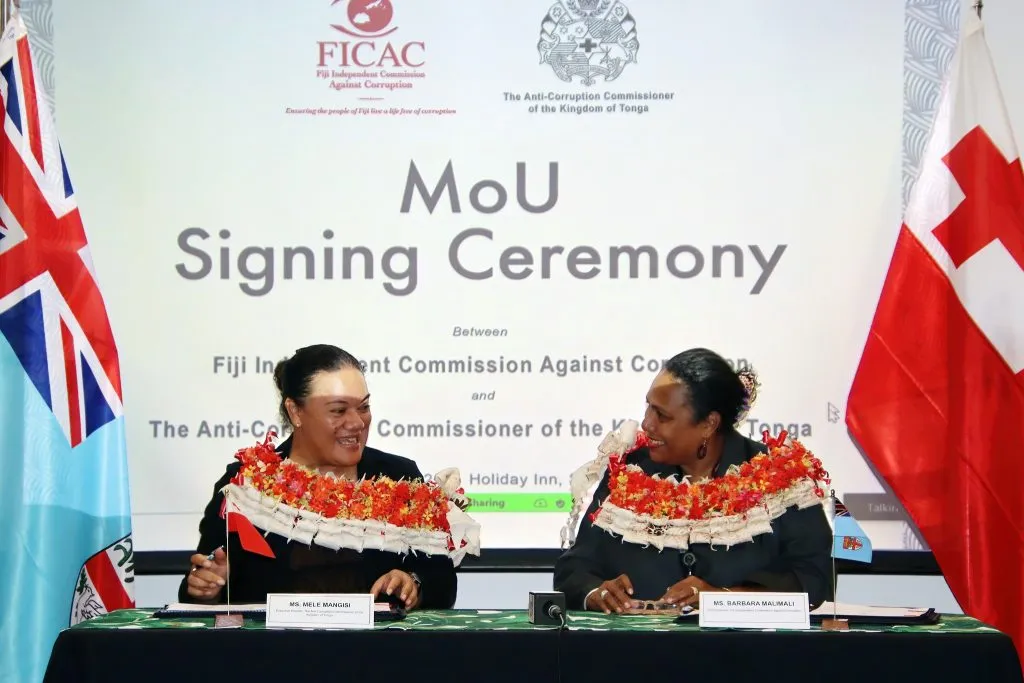
We cannot afford to sideline half our population.
We cannot build strong institutions without gender balance.
We cannot talk about development without talking about culture.
And we cannot talk about culture without talking about gender.
My own journey has been shaped not only by culture, but also by opportunity — and I must acknowledge the role of the Australia Awards in that journey. The Australia Awards didn’t just give me a qualification. It gave me exposure to global thinking. It gave me confidence to challenge context. It gave me tools to navigate complex governance systems. It connected me to leaders who modelled inclusive leadership. And it strengthened my understanding of how to use my voice — not outside my culture, but within it. It taught me that gender equality is not a Western idea. Allyship is not foreign. And Pacific values can absolutely support modern leadership.
So when I stand here today and talk about men as allies, I speak from lived experience. I have seen what happens when men step up.
It changes the room.
It changes culture,
And it changes the future.
Mālō ‘aupito.
